Now is the time to show every single person with disabilities that they matter
Introduction
Persons with disabilities are often concerned with their welfare and how they can fairly compete with the so-called able bodied people in society. This is a genuine concern, given that the playing field is not level. It is not level because of limitations placed by impairments, attitudes, practices and beliefs. Because of these limitations, measures are required to level the playing field. One way to achieve the levelling is to make constitutional provisions. In 2008, Zimbabwe created a Government of National Unity (GNU) following disputed elections. Part of the mandate of the GNU was to lead Zimbabweans in crafting a home- grown constitution to replace the 1979 one that was crafted in Lancaster, United Kingdom at the end of colonial rule in Zimbabwe (Government of Zimbabwe, 2008). Indeed this assignment was accomplished with the final draft constitution receiving presidential assent on 22 May 2013. The document has been received with mixed reactions from several groups, including people with disabilities.Background
The International Convention on the Rights of People with Disabilities (ICRPD) uses a social model of disability, and sees disability as long-term physical, mental, intellectual or sensory impairments which in interaction with various barriers may hinder the full and effective participation of the affected persons in society on an equal basis with others. The view by ICRPD places emphasis on the role society plays in making impaired individuals disabled. This focus has also influenced the way Zimbabwe conceptualises disability. One of Zimbabwe’s pieces of legislation, the Disabled Persons Act Chapter 17:01 of 1992, defines a disabled person as ..a person with a physical, mental or sensory disability, including a visual, hearing or speech functional disability, which gives rise to physical, cultural or social barriers inhibiting him from participating at an equal level with other members of society in activities, undertakings or fields of employment that are open to other members of society. The views by ICRPD and the Government of Zimbabwe indicate that disabilities appear in various forms. They may be physical, cognitive, mental, neurological, sensory, emotional or developmental; at times a person may have multiple disabilities. There is often a misunderstanding of three words relating to disability, namely disability, impairment and handicap. The confusion surrounding these words is often seen in their use, verbally or in written form. At times they are used interchangeably, to mean the same thing. To clarify what these three words mean, it is crucial to describe the disability process. The process starts with impairment, followed by handicap and then disability. At impairment level, a person looses a body part. Thus, loss of a physical body part becomes impairment. For example, in an accident, a limb may be lost. This results in an impaired person. Alternatively, a brain cell responsible for memory may be damaged. The loss of that cell becomes impairment. Further in the process, a person whose limb is lost may be unable to work or walk. In the other case, a person whose brain cell responsible for memory is injured may also lose the memory function. Thus, loss of the function of walking, working or memorizing becomes a handicap. If a handicapped person fails to get a wheel chair that can compensate loss of body part and loss of function, then the person becomes disabled. Or if a person with a wheelchair is unable to access a building because it has stairs then that person becomes disabled. Disability statistics are a source of contention. The contention often emanates from what constitutes disability. Globally, it is estimated that over one billion people live with some form of disability (WHO, 2011). According to WHO, 15% of any given population has various forms of disability translating to over 1 billion people with disabilities in the world, of whom 2-4% experience significant difficulties in functioning. Over 75% of people with disabilities are in developing countries. In Zimbabwe, the statistics are equally contentious (Choruma, 2007 and Mtetwa, 2012). On the one hand, WHO estimates show that there are about 1,8 million people with disabilities in Zimbabwe, which is about 15% of the total population (WHO, 2011)
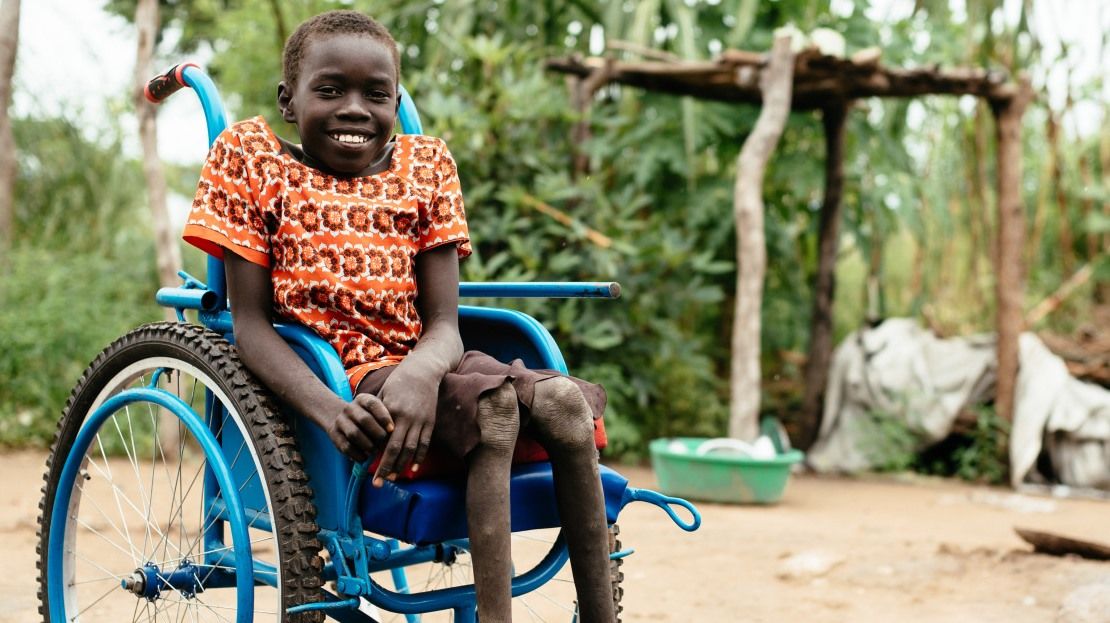
Zimbabwe’s President Emmerson Mnangagwa launched the country’s national disability policy
Disability in Zimbabwe under the New Constitution: Demands and Gains of People with Disabilities
People with disabilities looked at the constitution making process as their biggest opportunity to have their dreams realized. They had numerous expectations including increased opportunities in health, education, social protection, habitation, participation and employment. Although they were excluded from the first stages of the process, they were later actively involved. The outcome of their involvement has been several provisions in the constitution addressing disability concerns. The extent to which these provisions are adequate or inadequate has been a subject of contention.We looked at the provisions in the final version of the constitution that received presidential assent on 22 May 2013vis-a-vis the expectations and demands of people with disabilities and concluded that the new constitution, unlike the previous one, takes a more inclusive approach which is the one preferred by the people living with disabilities, their organisations as well as other people, organisations and interest groups interested in the cause of people with disabilities